



The 2026 SEO Guide: Why Bing Is the AI-Powered Engine You Can’t Ignore
For over a decade, the world of search has been dominated by one name: Google. As a result, digital marketers and businesses have poured their resources into mastering Google’s algorithm. But the digital landscape is undergoing a seismic shift, driven by artificial intelligence. And at the heart of this transformation is a player you might have underestimated: Bing.
Ignoring Bing in 2026 isn’t just a missed opportunity; it’s a strategic error. This isn’t about Bing “beating” Google in traditional search. It’s about recognizing that Bing has evolved. It is now the foundational data layer for a vast ecosystem of AI experiences, from operating systems to dedicated AI assistants.
This comprehensive guide will walk you through why Bing demands your attention, how to leverage its increasingly sophisticated tools, and how to build a future-proof SEO strategy that embraces the new era of AI-powered search.
Part 1: The Evolution of Bing—More Than a Search Engine
To understand Bing’s importance, you must first understand its new role. Bing is no longer just a website you visit to find information. It’s the engine powering conversational AI and intelligent assistants that millions of people use daily.
The Integration with Microsoft Copilot
The single biggest game-changer is Bing’s deep integration with Microsoft Copilot. Copilot is not just an app; it’s woven into the fabric of Microsoft’s most popular products:
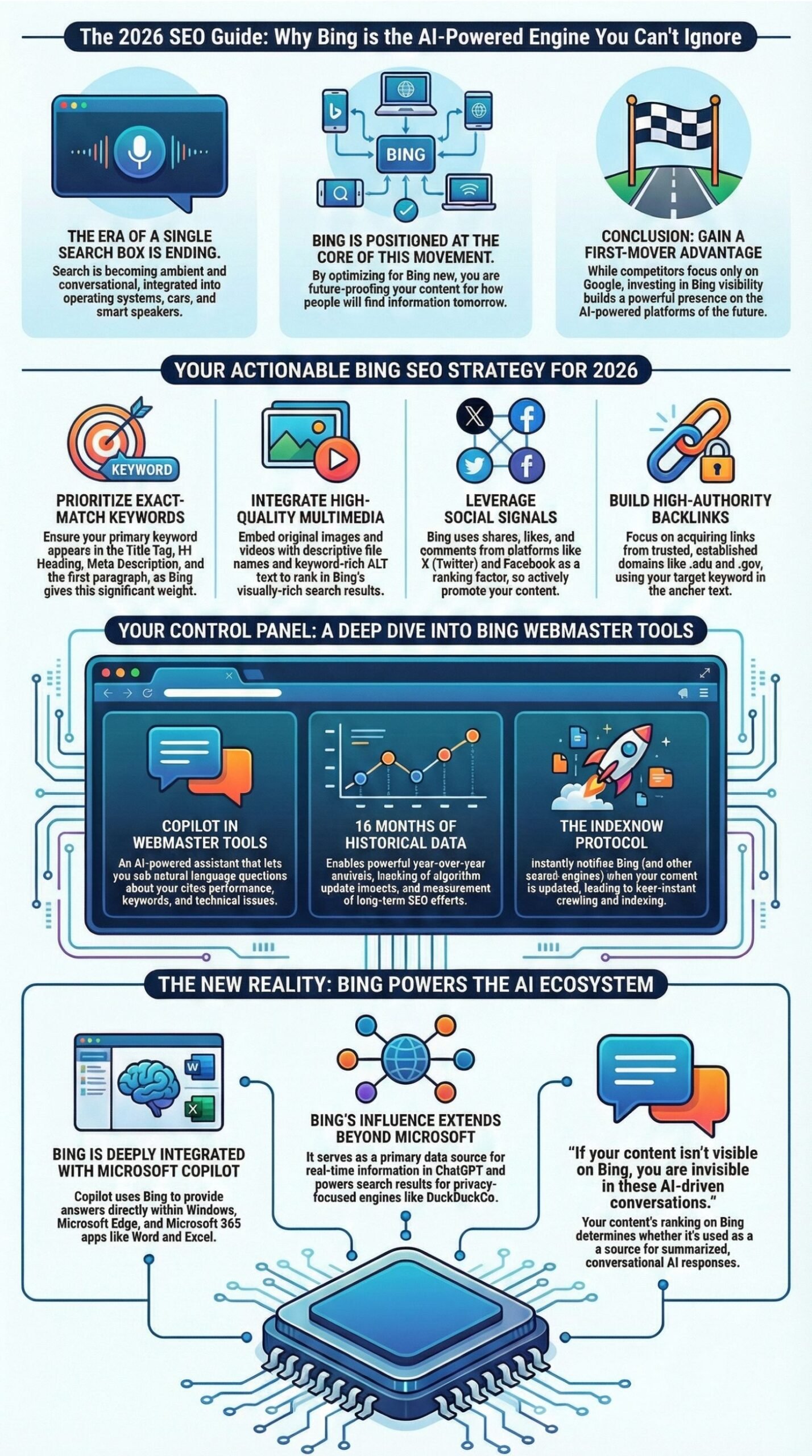
What this means for you: When a user asks Copilot, “What are the best noise-canceling headphones for under $200?”, the answer isn’t just a list of links. It’s a summarized, conversational response built from the top-ranking content on Bing. If your content isn’t visible on Bing, you are invisible in these AI-driven conversations.
Powering the Wider AI Ecosystem
Bing’s influence extends far beyond Microsoft’s own products.
Every time one of these services answers a question using web data, there’s a high chance Bing is working behind the scenes. Your visibility on Bing is no longer about one website; it’s about being the source of truth for countless AI interactions.
Part 2: A Deep Dive into Bing Webmaster Tools
If Bing is the engine, then Bing Webmaster Tools is your dashboard and control panel. Microsoft has been investing heavily in this platform, turning it into a powerful, data-rich resource that, in some ways, is becoming even more user-friendly than its Google counterpart.
Key Features You Must Master:
Part 3: Your Actionable Bing SEO Strategy for 2026
Optimizing for Bing shares many principles with Google SEO (quality content is still king), but Bing has its own nuances. Focusing on these can give you a competitive edge.
Step 1: On-Page SEO with a Bing-Specific Focus
Step 2: Technical SEO for Bing
Step 3: Off-Page SEO (Link Building)
Final Thoughts: The Future is Searched Everywhere
The era of a single search box is ending. The future of search is ambient, conversational, and integrated into the tools we use every day. People are “searching” when they talk to their operating system, their car, or their smart speaker.
Bing is strategically positioned at the core of this “Search Everywhere” movement. By investing in your Bing visibility now, you are not just optimizing for a search engine. You are optimizing for the future of how people will find information. While your competitors remain fixated solely on Google, you have the opportunity to build a powerful presence on the AI-powered platforms of tomorrow, gaining a crucial first-mover advantage.